



















 March 28, 2026
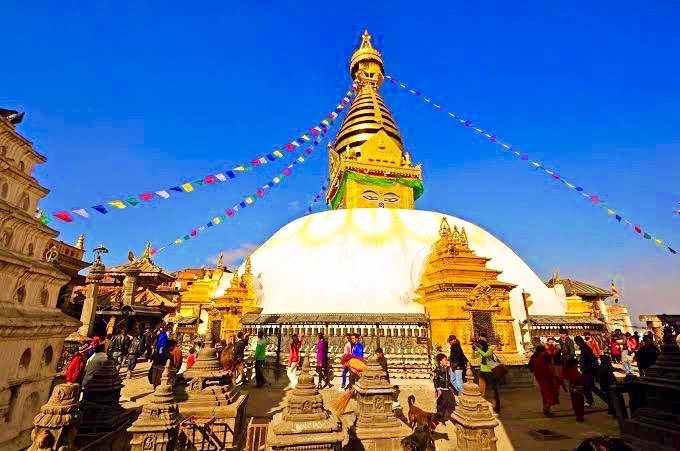
Swayambhunath , also known as the “Monkey Temple,” is one of the oldest and most revered religious sites in Kathmandu. Perched atop a hill overlooking the Kathmandu Valley, this sacred stupa is an important pilgrimage destination for both Buddhists and Hindus.
Historical Background
Swayambhunath is believed to be over 2,000 years old, making it one of the most ancient religious monuments in Nepal. According to legend, the Kathmandu Valley was once a vast lake. A divine lotus grew in its center, radiating a brilliant light. When the lake was drained, the hill of Swayambhunath emerged, and the stupa was built on this sacred spot.
The name “Swayambhu” means “self-created” or “self-existent,” reflecting the belief that the site arose spontaneously as a manifestation of divine energy.
Architectural Features
The main stupa of Swayambhunath is a striking structure with deep spiritual symbolism:
- A white dome representing the world
- A golden spire rising above it
- The all-seeing eyes of the Buddha painted on all four sides, symbolizing wisdom and compassion
- Prayer wheels and colorful prayer flags surrounding the complex
Visitors must climb about 365 stone steps to reach the top, where they are rewarded with panoramic views of the Kathmandu Valley.
Religious Significance
Swayambhunath is a unique site where both Buddhism and Hinduism coexist harmoniously. For Buddhists, it represents one of the holiest stupas, while for Hindus, it is also a sacred place associated with various deities.
Monks, pilgrims, and tourists visit daily to spin prayer wheels, light butter lamps, and offer prayers. The peaceful atmosphere makes it a center for meditation and spiritual reflection.
Cultural and Living Heritage
The area around Swayambhunath is lively, often inhabited by monkeys—hence the nickname “Monkey Temple.” The site is also surrounded by shrines, temples, and monasteries, reflecting a blend of cultural traditions.
Festivals and rituals are regularly held here, attracting devotees from across Nepal and beyond.
UNESCO World Heritage Site
Swayambhunath is part of the UNESCO World Heritage Sites listed under the Kathmandu Valley. Its historical, cultural, and spiritual importance makes it a global treasure.
Conclusion
Swayambhunath is more than just a religious monument—it is a symbol of faith, harmony, and ancient wisdom. Rising above Kathmandu, it continues to inspire visitors with its beauty, history, and spiritual energy.
Travel Guide: Swayambhunath, Kathmandu
Visiting Swayambhunath is a must when traveling to Kathmandu. This iconic hilltop stupa offers not only deep spiritual experience but also stunning panoramic views of the valley.
How to Reach
- From Kathmandu city center: About 10–15 minutes by taxi
- From Tribhuvan International Airport: Around 20–30 minutes by car
- You can easily take a taxi, ride-sharing service, or even local transport
Entrance & Timing
- Open daily from early morning to evening
- Best time to visit: Sunrise or sunset for peaceful atmosphere and beautiful views
- Entrance fee applies for foreign visitors
What to Expect
Climb the Steps
- About 365 steps to reach the top
- A spiritual walk with prayer flags and small shrines along the way
Main Stupa
- The iconic white dome with Buddha’s eyes
- Spin prayer wheels and walk clockwise (kora)
Viewpoint
- One of the best panoramic views of Kathmandu Valley
Monkeys
- The site is famous for monkeys—keep your belongings safe
Travel Tips
- Wear comfortable shoes for climbing
- Dress modestly (respect religious culture)
- Keep water with you
- Avoid carrying visible food (monkeys may grab it)
- Visit early morning for less crowd and peaceful vibe
Nearby Attractions
You can combine your visit with:
Best Time to Visit Nepal
- October – December: Clear skies, best for travel
- March – May: Pleasant weather and greenery
Conclusion
A trip to Swayambhunath is more than sightseeing—it’s a spiritual journey. Whether you seek peace, culture, or breathtaking views, this sacred site offers a truly unforgettable experience.









 Prev Post
What do you think?
Show comments / Leave a comment