



















 February 25, 2026
Dhido is one of the most traditional and culturally significant foods of Nepal. Deeply rooted in rural life, this simple yet nourishing dish represents the authentic taste of the Nepali hills and mountains. For generations, Dhido has been a staple meal for hardworking families, especially in remote villages where locally grown grains are an important part of daily life.
What is Dhido?
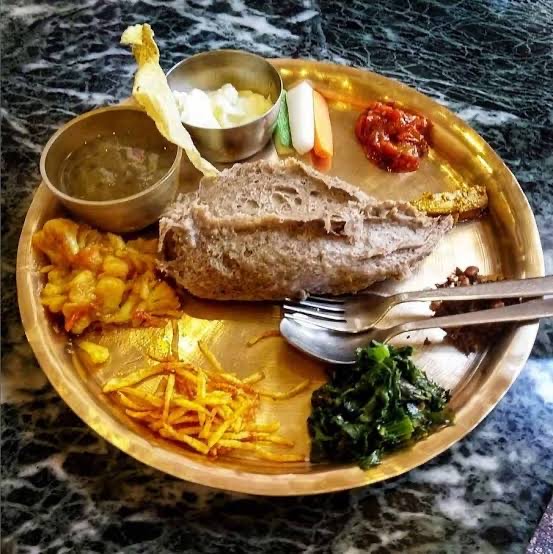
Dhido is a thick porridge-like food made by slowly cooking flour in boiling water while stirring continuously. It is most commonly prepared from millet flour (kodo) or buckwheat flour (fapar), though maize flour is also used in some regions. Unlike rice, which needs to be boiled and drained, Dhido requires constant stirring until it becomes smooth, firm, and lump-free.
The texture is soft yet dense, and it is typically shaped into small portions before eating.
Cultural Importance
Dhido is especially popular in the hilly and mountainous regions of Nepal, including areas around the Gandaki Province and Karnali Province. In the past, it was considered a “poor man’s food” because rice was more expensive and difficult to grow in higher altitudes. However, today Dhido is highly valued for its nutritional benefits and traditional identity.
Many Nepalis now proudly choose Dhido over rice as a healthier alternative.
How It Is Eaten
Dhido is usually served hot and enjoyed with:
- Gundruk (fermented leafy greens)
- Seasonal vegetable curry (tarkari)
- Lentil soup (dal)
- Pickles (achar)
- Meat curry (especially goat or chicken)
Instead of using a spoon, many people eat Dhido by hand, rolling it into small balls and dipping it into curry or soup.
Health Benefits
Dhido is rich in:
- Fiber c Iron , Calcium , Essential minerals
Millet and buckwheat are gluten-free and easier to digest than polished white rice. Because of this, Dhido is becoming popular among health-conscious people in cities as well.
Conclusion
Dhido is more than just food—it is a symbol of Nepal’s rural heritage and simple living. From village kitchens to modern restaurants, this humble dish continues to connect people with their roots and traditions. Whether eaten with gundruk and pickle or with rich meat curry, Dhido remains a beloved and nourishing part of Nepali cuisine.









 Prev Post
What do you think?
Show comments / Leave a comment